

Why Bagasse Tableware? Leading the Way in Sustainable Packaging Solutions.
Explore the compelling reasons why sugarcane bagasse is revolutionizing the food service industry. Understand its environmental benefits, superior performance, and how choosing bagasse tableware aligns your business with growing consumer demand for sustainability in the USA, European, and Australian markets.
Bagasse is the fibrous residue left behind after sugarcane juice extraction.
Once treated as agricultural waste, it is now valued as a renewable, compostable raw material ideal for sustainable food packaging.
By transforming this byproduct into high-performance molded fiber products, we reduce landfill waste and support circular manufacturing.
How It’s Made:
- Collection: After sugarcane juice is extracted, the leftover fibers — known as bagasse — are collected and prepared for reuse.
- Pulping: The fibers are mixed with water to form a smooth pulp. For food-grade use, no harmful chemicals are needed. If whitening is required, we use chlorine-free processes (ECF or TCF).
- Molding: This pulp is molded into plates, bowls, and containers using high heat and pressure, creating durable, heat-resistant tableware.
- Trimming & Sterilization:Each item is trimmed for a clean edge and sterilized to ensure food safety and a professional finish.
Key Takeaway:Bagasse turns agricultural waste into certified food packaging — tree-free, PFAS-free, and ready for global eco-conscious markets.
Bagasse packaging stands out as an ideal alternative to plastic and paper disposables — offering a unique balance of compostability, strength, and food-grade safety.
The chart below compares bagasse with conventional materials across key categories like environmental friendliness, durability, and cost.
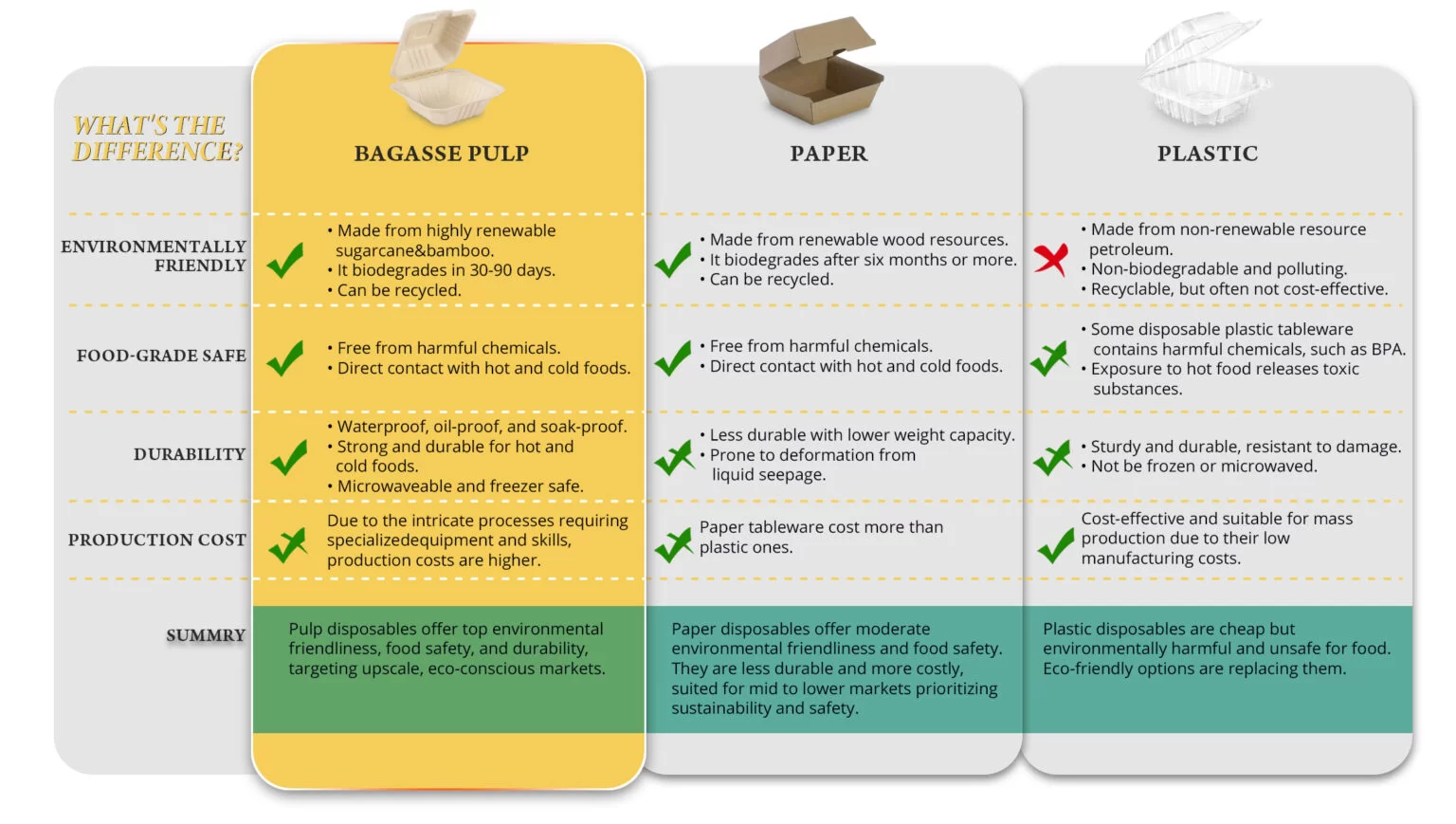
- Bagasse pulp is made from renewable sugarcane waste. It is compostable within 90 days, PFAS-free, and suitable for hot and cold foods. Microwave and freezer safe, it offers an ideal balance of sustainability and performance for foodservice applications.
- Paper disposables offer moderate environmental benefits but tend to be less durable. They may deform when exposed to liquids and often require additional coatings, which can affect recyclability and compostability in some regions.
- Plastic is durable and cost-effective but non-compostable and petroleum-based. Many single-use plastic items are now restricted or banned due to their environmental impact and potential health risks from chemical exposure.
Key Takeaway: Bagasse packaging provides the sustainability of paper with the strength of plastic — without the downsides of either. It’s the smart choice for modern food brands and global eco compliance.
Serve Your Customers with Reliable Compostable Packaging
Our sugarcane bagasse tableware is built for foodservice — strong, safe, and fully compostable.Get free samples or request a quote today to see how our products can meet your catering and takeaway needs.
Bagasse tableware is designed to be compostable, meaning it can break down into nutrient-rich soil under specific composting conditions. This diverts waste from landfills and contributes to a circular economy.
BPI (North America): Meets ASTM D6400/D6868 for industrial compostability.
FDA (USA): Ensures materials are safe for food contact.
EN 13432 (Europe): European standard for compostable packaging in industrial facilities.
OK compost HOME / INDUSTRIAL (TÜV Austria): Widely recognized international certifications.
PFAS-Free: Indicates absence of Per- and Polyfluoroalkyl Substances.
ISO 9001: Quality management systems.
BRCGS: Global standard for food safety.
Key Takeaway: Look for these certifications to ensure the bagasse tableware you source meets genuine compostability standards and food safety regulations.
Serving hot, cold, dry or saucy foods — bagasse does it all, sustainably.
- EU Single-Use Plastics (SUP) Directive: Bans or restricts many single-use plastic items, driving demand for alternatives like bagasse.
- National & Regional Sustainable Packaging Laws: Growing regulations in the USA, Europe, and Australia to reduce plastic waste.
- Growing Consumer Awareness & Demand: Consumers actively seek businesses using sustainable packaging.
- Corporate Sustainability Goals (ESG): Businesses adopt ESG criteria, including reducing plastic waste.
- Rise of the Circular Economy Model: Focus on minimizing waste; compostable materials like bagasse fit perfectly.
Key Takeaway: Legislative pressures, consumer demand, and corporate responsibility are creating a strong market for sustainable packaging like bagasse tableware.
At EcoPulpPack (representing ecopulppack.com), we are deeply committed to not just providing sustainable products, but also to employing sustainable manufacturing processes.
How It’s Made:
- Responsible Sourcing: We ensure our bagasse is sourced from sustainably managed sugarcane operations.
- Energy & Water Efficiency: We continuously strive to optimize our production processes to minimize energy consumption and water usage.
- Waste Reduction: Our manufacturing aims to minimize waste, with a focus on recycling and reusing materials.
- Quality & Safety First: We adhere to strict quality control measures and ensure our products meet international food safety standards.
Key Takeaway: Partnering with EcoPulpPack means choosing a supplier that shares your commitment to environmental responsibility.
Frequently Asked Questions
Yes. High-quality bagasse tableware is surprisingly strong and rigid. It handles hot, wet, or oily food without bending or soaking through — often outperforming standard paper plates in real-world use.
Absolutely. Bagasse tableware is microwave-safe and freezer-safe, making it ideal for both food preparation and storage. It maintains its structure under both hot and cold conditions.
When stored in a cool, dry place, bagasse tableware lasts 1–2 years or more without degrading. It only starts to break down when exposed to composting conditions such as moisture, heat, and microbial activity.
Using visible eco-friendly packaging like bagasse helps your brand stand out. It signals your commitment to sustainability, supports compliance with packaging regulations, and builds trust with B2B buyers and end consumers who prioritize environmental responsibility.
Yes. Bagasse is 100% compostable and biodegradable. Under industrial composting conditions, it typically breaks down within 60–90 days, leaving no toxic residue.
- Professional feedback within 8 hour
- Best possible pri ces for you